A Simple Key For drilling fluid loss Unveiled
Wiki Article
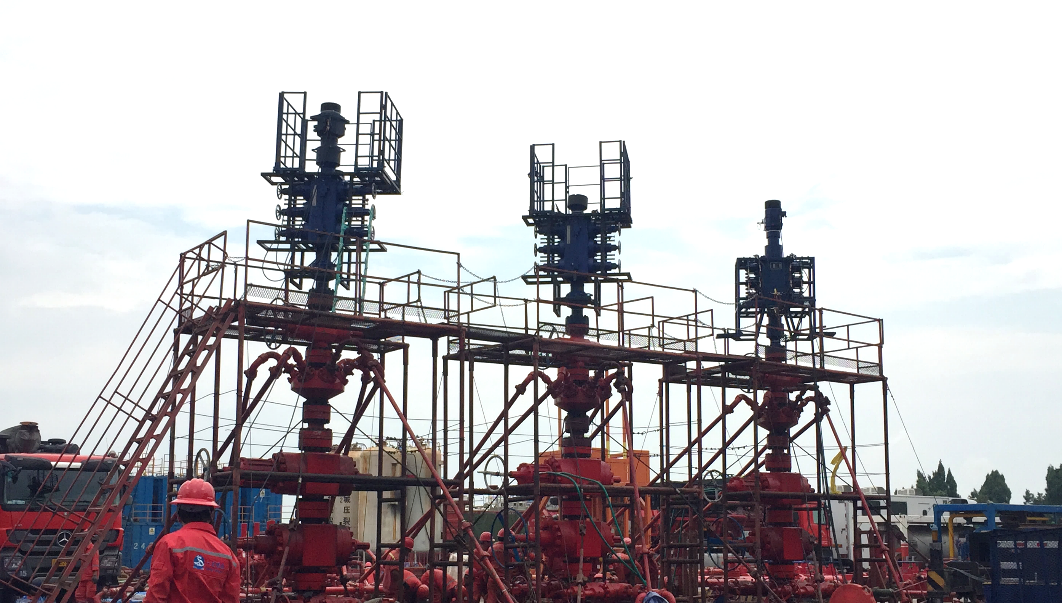
Operational Conditions: Drilling was performed beneath overbalanced drilling (OBD) disorders, exactly where the hydrostatic force of the drilling mud column intentionally exceeds the development pore stress.
Eventually, when the styles give actionable insights into mud loss prediction, their integration into serious-time drilling operations needs further testing. Long run get the job done really should investigate coupling these predictive frameworks with Stay drilling info streams and choice-help methods To judge their functionality under dynamic discipline situations.
This website is using a protection services to safeguard by itself from on the internet attacks. The motion you just performed activated the safety Option. There are numerous actions that may set off this block together with submitting a specific term or phrase, a SQL command or malformed info.
This strategy gives a robust, interpretable, and straight applicable Instrument for maximizing serious-time drilling fluid administration and substantially mitigating the financial and environmental impacts of lost circulation.
Furthermore, the leading control factor from the organic fracture variety lost control effectiveness is plugging intensity and plugging compactness.
An indoor fracture plugging simulation experiment was executed that has a self-created portable damage evaluation instrument [31]. When Checking out the impact of experimental methods within the control efficiency of drilling fluid loss, distinctive experimental techniques are set.
Quite simply, for typical drilling functions, hydrostatic pressure needs to be larger than development pressure but reduced than fracturing force
As proven in Figure 18a, the loss rate and cumulative loss quantity of drilling fluid underneath diverse fracture lengths. The instantaneous loss price of drilling fluid is a straight line section with the rise in fracture length, and the stream price within the fracture entrance is equal beneath the exact same overbalanced stress, fracture width, and fracture top. The curve from the steady loss charge and cumulative loss quantity of drilling fluid decreases with the increase in fracture size, as well as slope steadily decreases. It can be hard to establish the size of the loss fracture depending on the distinction between the inflow and outflow of drilling fluid. In the event the fracture is prolonged more than enough, there is basically no variation in the overall pool quantity and liquid amount height in the drilling fluid. From the secure loss phase, the BHP curve initial rises and after that slowly techniques a straight line with the rise in fracture size. The key reason why why the instantaneous loss rate of drilling fluid is equal and also the stable loss price is different is that the volume within the fracture boosts with the increase in fracture duration, Hence the fluid stress in the fracture improves with the rise in fracture duration (Determine 18c).
After discussing the behavior of drilling fluid loss in wedge-formed fractures with equal inlet widths and unequal outlet widths, the numerical simulation results of drilling fluid loss in wedge-formed fractures with unique inlet widths and equal outlet widths are revealed in Determine 23. As demonstrated in Figure 23a, the instantaneous loss level and cumulative loss curve of drilling fluid raise linearly with the increase in inlet width, though the pattern of cumulative loss curve indicates the secure loss fee of drilling fluid also increases with the rise in inlet fracture width. The BHP and standpipe pressure fall value lessen General with the rise within the inlet width of your wedge-shaped fracture, but the difference in loss level among distinctive inlet width wedge-shaped fractures is tiny, and the difference between the BHP and standpipe force fall value is just not significant (Figure 23b,c). The fluid strain in the fracture mostly depends on the size of the amount from the fracture. The fluid pressure while in the fracture raises with the rise in try here the opening in the wedge-shaped fracture inlet, although the overbalanced tension decreases with the rise within the inlet width from the wedge-shaped fracture.
The size of the drilling displacement will specifically have an impact on the move level from the drilling fluid inside the drill pipe as well as the annulus, and the size of the stream fee of the drilling fluid establishes the annular strain loss, therefore indirectly affecting the overbalanced pressure. Determine 11a is the BHP–displacement curve during the changeover phase of circulation–loss plus the steady loss phase. The BHP in the two levels boosts with the rise in drilling displacement. The increase in drilling fluid displacement will lead to a rise in the stream charge in the drilling fluid inside the drill pipe and also the annulus, thus rising the circulation resistance, so the annular force loss improves, and the overall BHP boosts. As proven in Determine 11b, the instantaneous loss level and cumulative loss volume curves of drilling fluid display a transparent upward trend, as well as steady loss price curve of your drilling fluid is nearly flat, though the response development in the cumulative loss quantity implies that the secure loss price curve of drilling fluid also rises with the increase in drilling displacement, but its expansion rate is very low and also the curve slope is smaller.
This creates a far more stable environment for drilling operations and minimizes the threats connected to fluid loss. In addition, modifications to drilling methods can further more mitigate the risk of fluid loss
Minimizing stream in the annulus above the loss may cause many other issues. Slow annular velocity lowers the carrying capacity on the mud. Cuttings may possibly accumulate in minimal-velocity regions and tumble back again to the bottom if the pump stops. This drop could cause pipe sticking.
Weight proportion of principal control variables of differing kinds of your drilling fluid lost control efficiency.
Overall loss scenarios: Demand superior-volume pumping of bridging resources accompanied by cement plugs or resin-primarily based sealing brokers.